As the scorching summer gradually gives way to the much-awaited monsoon, communities across Bengal celebrate Aranya Shashthi, a festival that beautifully intertwines nature, health, motherhood, and social harmony. Observed on the Shukla Shashthi (sixth day of the waxing moon) in the month of Jaishtha (May–June), the festival is dedicated to Goddess Shashthi, the traditional protector of children and motherhood.
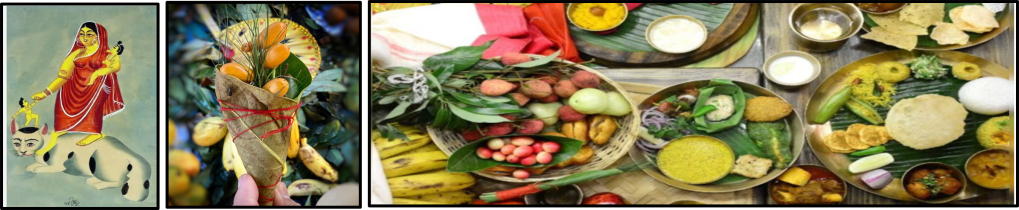
The word Aranya means “forest,” reflecting the festival’s close association with trees, seasonal fruits, and forest resources. Traditionally, women collect offerings such as fresh bamboo shoots (kurul), unripe dates, betel nuts, paddy grains, and seasonal fruits like mangoes, bananas, jamun, jackfruit, and karamcha. These items are arranged as part of the worship, symbolizing nature’s abundance and humanity’s dependence on biodiversity.
A unique feature of the festival is the creation of an idol of Goddess Shashthi from rice paste, banana pulp, and natural colours. Alongside the goddess, figures of children, a black cat, miniature trees, and characters from the traditional Vrata Katha are carefully crafted. The black cat, considered the vehicle of Goddess Shashthi, plays a central role in the sacred story narrated during the ceremony.
The Vrata Katha tells the story of a greedy daughter-in-law who falsely blamed a cat for her own misdeeds. Through a series of hardships and eventual repentance, she learned the values of honesty, compassion, and responsibility. Like many traditional folk narratives, the story serves as a moral lesson while emphasizing respect for animals and nature.
At the conclusion of the ritual, mothers place their children before the goddess and pray for their health, safety, and long life. They fan not only their own children but all children present, symbolizing collective care and community responsibility for the younger generation. In folk tradition, Goddess Shashthi is regarded as the protector of children from various illnesses, including skin diseases, symbolizing maternal care, child welfare, and community health.
Traditional Wisdom and Ayurvedic Insights
Aranya Shashthi is celebrated during a critical seasonal transition known in Ayurveda as Ritu Sandhi, the period between Grishma Ritu (summer) and Varsha Ritu (monsoon). Ayurveda recognizes this time as one when digestive strength (Agni) and immunity may be weakened, making the body more susceptible to illness.
Interestingly, many customs associated with Aranya Shashthi align with sound nutritional and ecological principles:
Seasonal fruits such as mango, jamun, lychee, banana, and jackfruit are rich in vitamins, minerals, antioxidants, and water, helping replenish nutrients lost during the intense summer heat. Light and easily digestible foods like doi-chira (flattened rice with yogurt), khoi (puffed rice), and kheer provide nourishment without burdening digestion. The use of bamboo shoots, fruits, leaves, and other plant materials reflects a deep respect for forests as sources of food, medicine, and ecological stability.
The festival’s focus on mothers and children resonates with Ayurveda’s branch of Kaumarbhritya, which deals with maternal and child healthcare. Modern science also supports many of these practices. Seasonal eating improves nutritional diversity, while community gatherings and shared rituals contribute to mental well-being, social support, and emotional resilience.
Jamai Shashthi: Honouring Family Relationships
The same day is also celebrated as Jamai Shashthi, one of Bengal’s most beloved family festivals. Historically, married daughters often lived far from their parental homes and visited infrequently. Jamai Shashthi provided a special occasion for families to reunite and strengthen relationships.
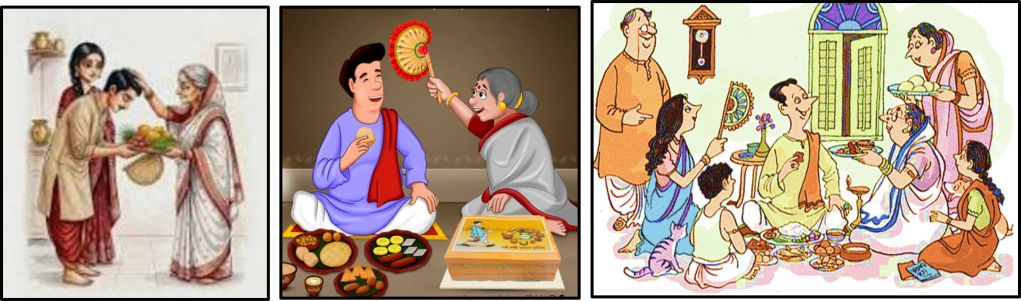
On this day, the son-in-law (jamai) is welcomed with affection and ceremonial blessings. The mother-in-law ties a turmeric-smeared sacred thread on his wrist, applies turmeric paste (Curcuma longa) and oil to his forehead, and blesses him with paddy grains (dhan – Oryza sativa) and sacred durba grass (Cynodon dactylon), symbols of fertility, prosperity, and longevity. A hand fan (pankha) is used during the ritual, reflecting the season’s intense summer heat and offering symbolic protection and comfort.
The festival is equally important for daughters and grandchildren, who receive blessings and participate in the family gathering.
A Feast of the Season
No Bengali festival is complete without food, and Jamai Shashthi is renowned for its elaborate menu. Traditional offerings include:
üDoi-chira (flattened rice with yogurt)
üKheer (rice pudding)
üKhoi and murki (puffed rice preparations)
üMangoes (Mangifera indica), bananas(Musa paradisiaca), jamun (Syzygium cumini), jackfruit (Artocarpus heterophyllus) , karamcha (Carissa carandus), lychees (Litchi chinensis), and wax apples (Syzygium samarangens)
üRice, lentils, seasonal vegetables, and fish (especially seasonal Hilsa) preparations
üTraditional bengalisweets such as sandesh, rasgulla, and payesh
Some households maintain older traditions, serving panta bhat (fermented rice) and motor daler bora (fried lentil fritters) with coconut, while others prepare a grand festive lunch.
A Festival for Modern Times
Although lifestyles have changed and families are often separated by cities, countries, and continents, the spirit of Aranya Shashthi and Jamai Shashthi remains vibrant. Today, these festivals continue to remind us of the importance of nurturing family relationships, respecting nature, caring for children’s health, and adapting our lifestyles to seasonal rhythms.
In many ways, Aranya Shashthi represents an early form of ecological awareness and preventive healthcare, while Jamai Shashthi celebrates the enduring bonds of family. Together, they showcase how traditional festivals can preserve cultural heritage while offering valuable lessons in health, sustainability, and community living.
In Maharashtra and the Konkan region, a similar tradition is observed during Adhik Maas, when parents invite their married daughter and son-in-law for a festive meal. Gifts and blessings are exchanged, strengthening family bonds and expressing affection.
May these traditions continue to inspire future generations to cherish nature, strengthen family ties, and embrace holistic well-being.
 GreenNeev Environmental Foundation
Leave a comment