GreenNeev Environmental Foundation

Walk with us Towards a Greener Tomorrow

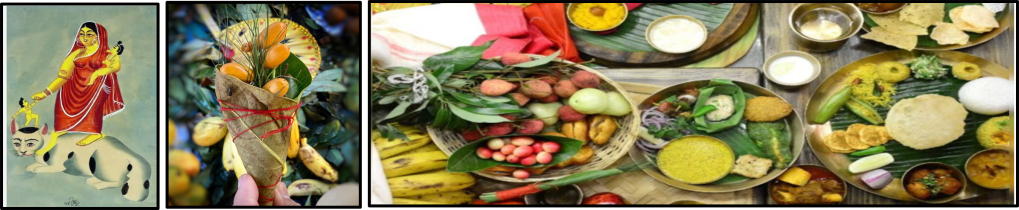
  • As the scorching summer gradually gives way to the much-awaited monsoon, communities across Bengal celebrate Aranya Shashthi, a festival that beautifully intertwines nature, health, motherhood, and social harmony. Observed on the Shukla Shashthi (sixth day of the waxing moon) in the month of Jaishtha (May–June), the festival is dedicated to Goddess Shashthi, the traditional protector of children and motherhood.

    The word Aranya means “forest,” reflecting the festival’s close association with trees, seasonal fruits, and forest resources. Traditionally, women collect offerings such as fresh bamboo shoots (kurul), unripe dates, betel nuts, paddy grains, and seasonal fruits like mangoes, bananas, jamun, jackfruit, and karamcha. These items are arranged as part of the worship, symbolizing nature’s abundance and humanity’s dependence on biodiversity.

    A unique feature of the festival is the creation of an idol of Goddess Shashthi from rice paste, banana pulp, and natural colours. Alongside the goddess, figures of children, a black cat, miniature trees, and characters from the traditional Vrata Katha are carefully crafted. The black cat, considered the vehicle of Goddess Shashthi, plays a central role in the sacred story narrated during the ceremony.

    The Vrata Katha tells the story of a greedy daughter-in-law who falsely blamed a cat for her own misdeeds. Through a series of hardships and eventual repentance, she learned the values of honesty, compassion, and responsibility. Like many traditional folk narratives, the story serves as a moral lesson while emphasizing respect for animals and nature.

    At the conclusion of the ritual, mothers place their children before the goddess and pray for their health, safety, and long life. They fan not only their own children but all children present, symbolizing collective care and community responsibility for the younger generation. In folk tradition, Goddess Shashthi is regarded as the protector of children from various illnesses, including skin diseases, symbolizing maternal care, child welfare, and community health.

    Traditional Wisdom and Ayurvedic Insights

    Aranya Shashthi is celebrated during a critical seasonal transition known in Ayurveda as Ritu Sandhi, the period between Grishma Ritu (summer) and Varsha Ritu (monsoon). Ayurveda recognizes this time as one when digestive strength (Agni) and immunity may be weakened, making the body more susceptible to illness.

    Interestingly, many customs associated with Aranya Shashthi align with sound nutritional and ecological principles:

    Seasonal fruits such as mango, jamun, lychee, banana, and jackfruit are rich in vitamins, minerals, antioxidants, and water, helping replenish nutrients lost during the intense summer heat. Light and easily digestible foods like doi-chira (flattened rice with yogurt), khoi (puffed rice), and kheer provide nourishment without burdening digestion. The use of bamboo shoots, fruits, leaves, and other plant materials reflects a deep respect for forests as sources of food, medicine, and ecological stability.

    The festival’s focus on mothers and children resonates with Ayurveda’s branch of Kaumarbhritya, which deals with maternal and child healthcare. Modern science also supports many of these practices. Seasonal eating improves nutritional diversity, while community gatherings and shared rituals contribute to mental well-being, social support, and emotional resilience.
    Jamai Shashthi: Honouring Family Relationships

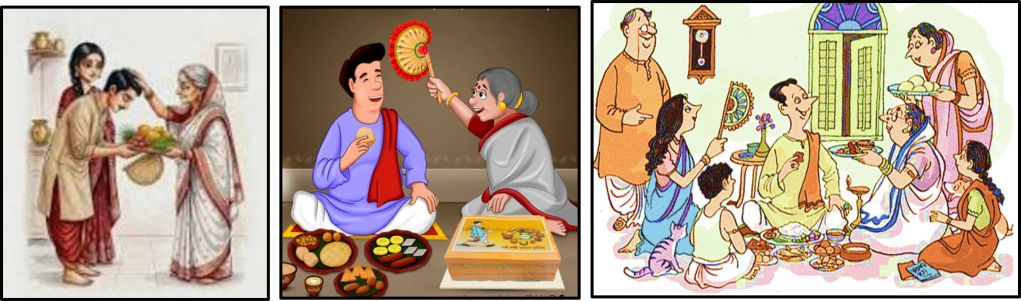
    The same day is also celebrated as Jamai Shashthi, one of Bengal’s most beloved family festivals. Historically, married daughters often lived far from their parental homes and visited infrequently. Jamai Shashthi provided a special occasion for families to reunite and strengthen relationships.

    On this day, the son-in-law (jamai) is welcomed with affection and ceremonial blessings. The mother-in-law ties a turmeric-smeared sacred thread on his wrist, applies turmeric paste (Curcuma longa) and oil to his forehead, and blesses him with paddy grains (dhan Oryza sativa) and sacred durba grass  (Cynodon dactylon), symbols of fertility, prosperity, and longevity. A hand fan (pankha) is used during the ritual, reflecting the season’s intense summer heat and offering symbolic protection and comfort.

    The festival is equally important for daughters and grandchildren, who receive blessings and participate in the family gathering.

    A Feast of the Season

    No Bengali festival is complete without food, and Jamai Shashthi is renowned for its elaborate menu. Traditional offerings include:

    üDoi-chira (flattened rice with yogurt)

    üKheer (rice pudding)

    üKhoi and murki (puffed rice preparations)

    üMangoes (Mangifera indica), bananas(Musa paradisiaca), jamun (Syzygium cumini), jackfruit (Artocarpus heterophyllus) , karamcha (Carissa carandus), lychees (Litchi chinensis), and wax apples (Syzygium samarangens)

    üRice, lentils, seasonal vegetables, and fish (especially seasonal Hilsa) preparations

    üTraditional bengalisweets such as sandesh, rasgulla, and payesh

    Some households maintain older traditions, serving panta bhat (fermented rice) and motor daler bora (fried lentil fritters) with coconut, while others prepare a grand festive lunch.

    A Festival for Modern Times

    Although lifestyles have changed and families are often separated by cities, countries, and continents, the spirit of Aranya Shashthi and Jamai Shashthi remains vibrant. Today, these festivals continue to remind us of the importance of nurturing family relationships, respecting nature, caring for children’s health, and adapting our lifestyles to seasonal rhythms.

    In many ways, Aranya Shashthi represents an early form of ecological awareness and preventive healthcare, while Jamai Shashthi celebrates the enduring bonds of family. Together, they showcase how traditional festivals can preserve cultural heritage while offering valuable lessons in health, sustainability, and community living.

    In Maharashtra and the Konkan region, a similar tradition is observed during Adhik Maas, when parents invite their married daughter and son-in-law for a festive meal. Gifts and blessings are exchanged, strengthening family bonds and expressing affection.

    May these traditions continue to inspire future generations to cherish nature, strengthen family ties, and embrace holistic well-being.
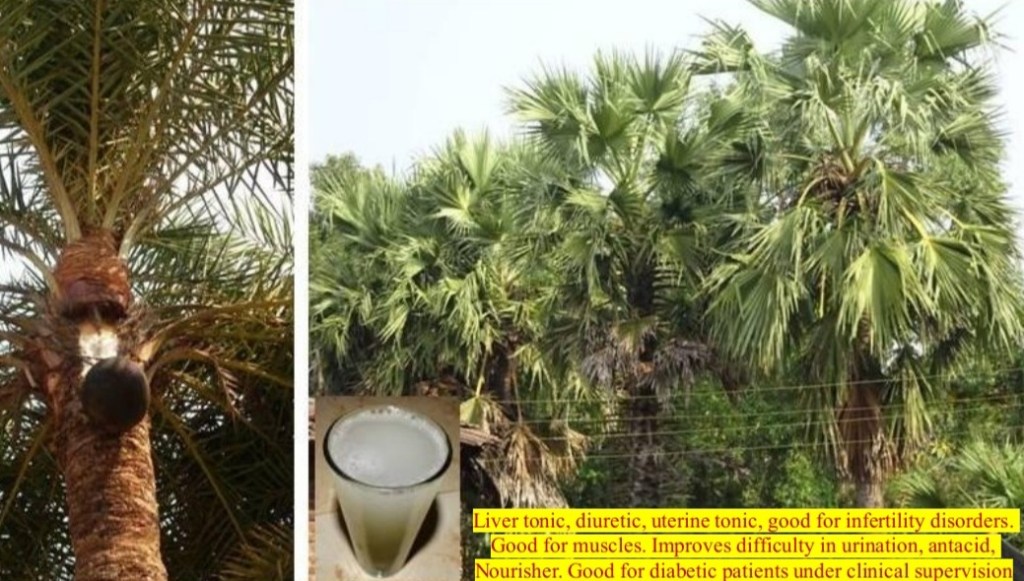
  • Nestled along the Konkan coast, Dahanu in Maharashtra’s Palghar district is a landscape where ecology, culture, and livelihoods are intricately woven together. One of the finest examples of this harmony is the traditional practice of sustainable toddy tapping, preserved for generations by the Warli and Bhandari communities. Far from being an extractive activity, toddy tapping here is guided by respect for the palm, the forest, and the rhythm of nature.

    Sustainable tody tapping begins with careful tree selection. Tappers choose only mature Palmyra (tadgola) or date palms and follow a system of rotation across groves. This ensures that individual trees are given adequate time to recover, often resulting in healthier palms and improved fruiting in subsequent seasons.

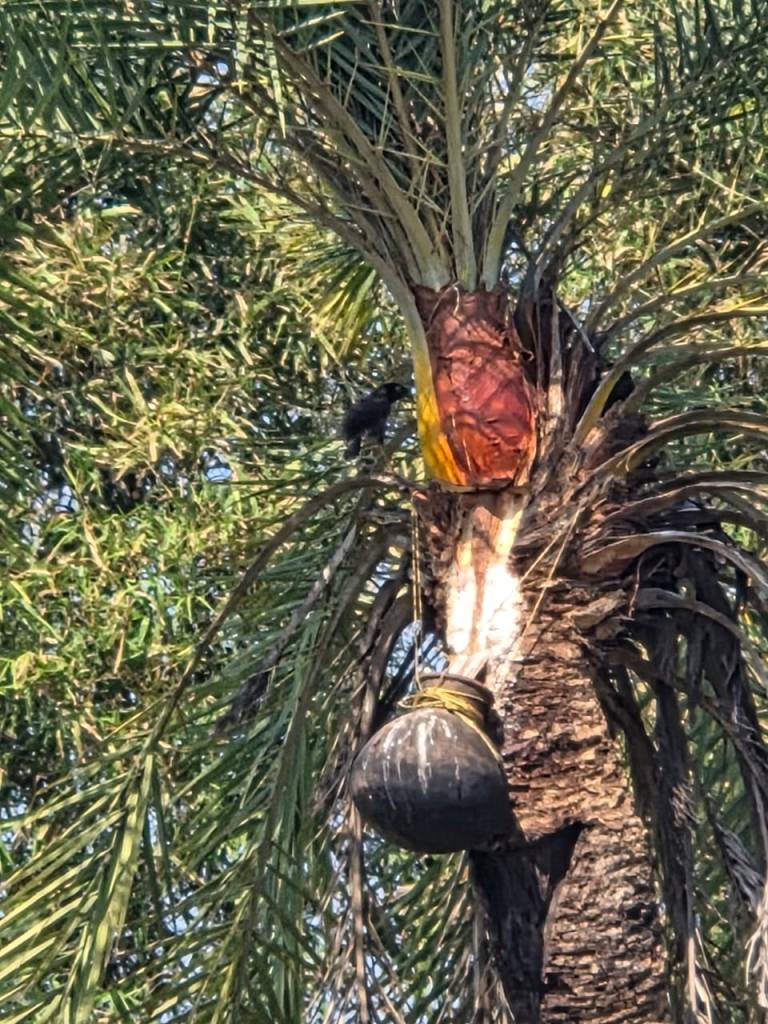
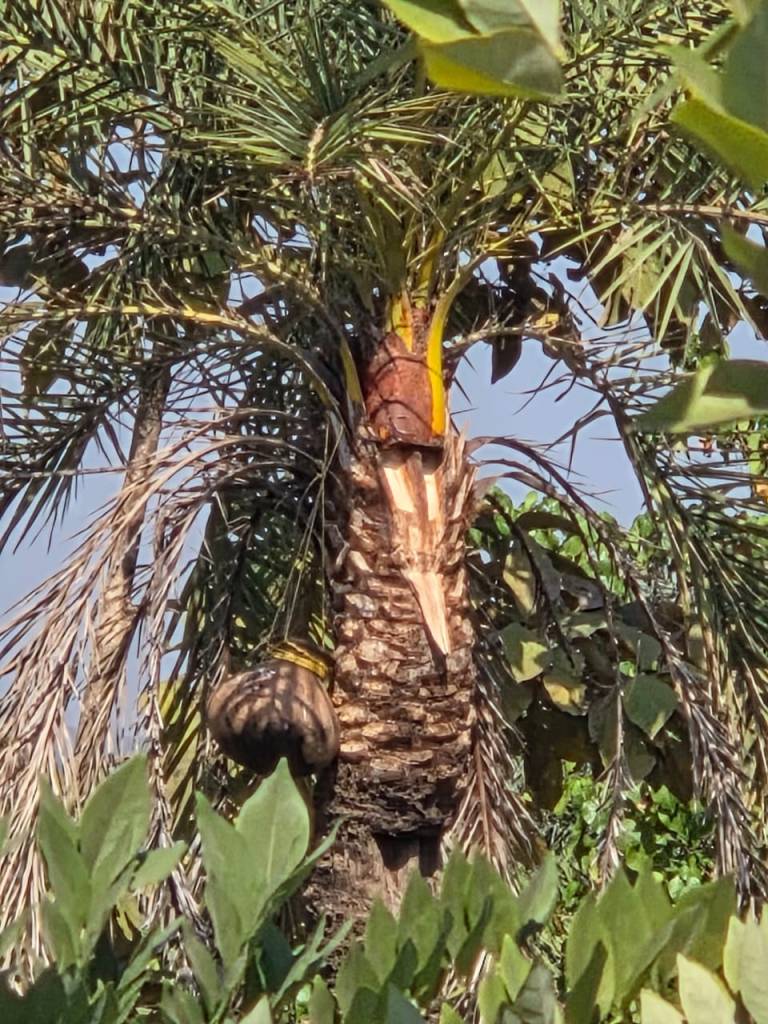
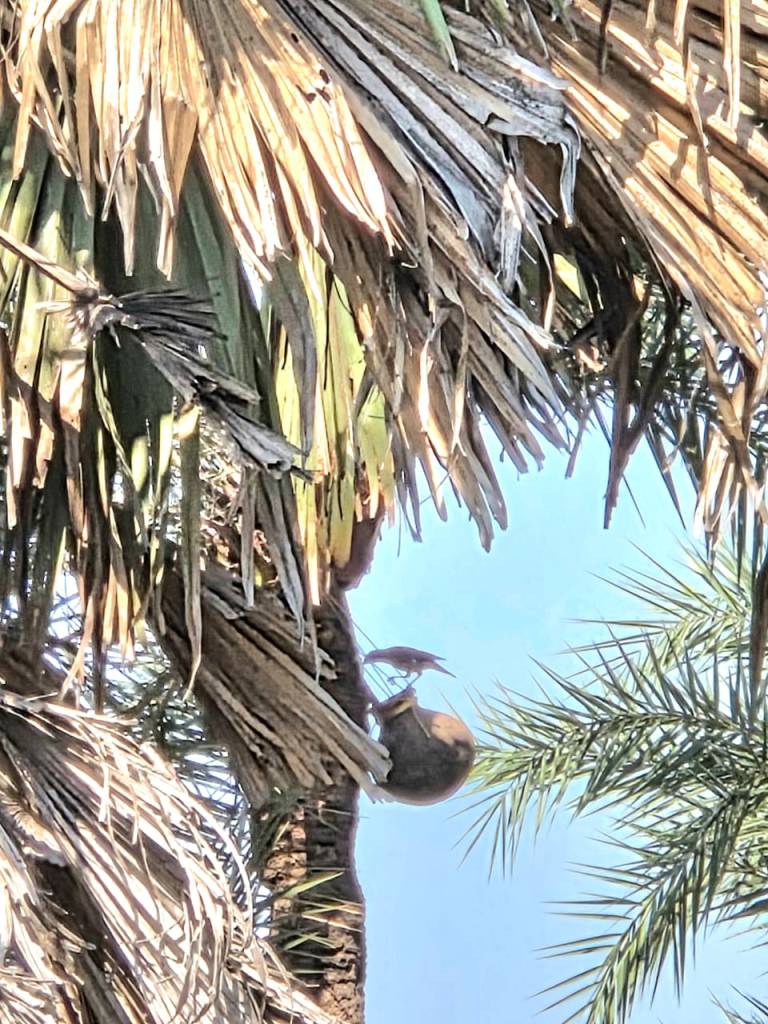
    The toddy tappers make precise, shallow, slanting incisions on the unopened flower bud, or spadix with skilled hands. This allows the sap to flow freely while leaving the structural integrity of the tree intact. Sap is collected in earthen pots, or matkas, whose porous clay keeps the liquid cool and slows down fermentation.

    The toddy tappers make precise, shallow, slanting incisions on the unopened flower bud, or spadix with skilled hands. This allows the sap to flow freely while leaving the structural integrity of the tree intact. Sap is collected in earthen pots, or matkas, whose porous clay keeps the liquid cool and slows down fermentation.

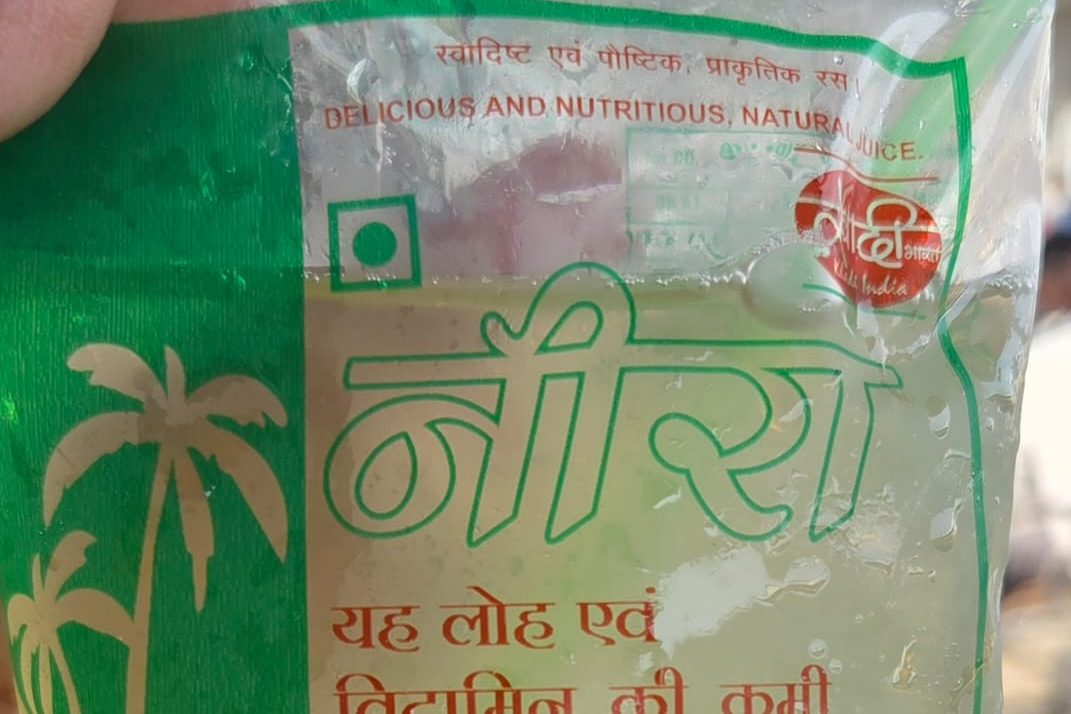
    This is especially important when harvesting neera—the fresh, non-alcoholic sap valued for its nutritional benefits.

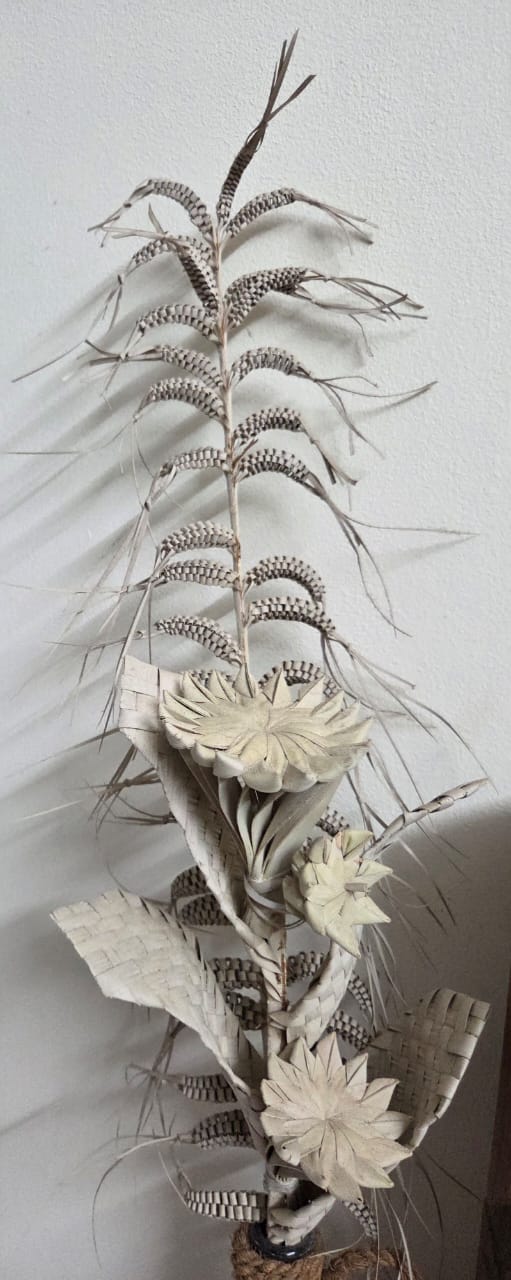
    Toddy tapping carries deep ecological and cultural significance. The palms are truly zero-waste resources: leaves are woven into baskets, artefacts or used for roofing. Regular climbing and cleaning of the crown during tapping is believed to reduce pest infestations naturally, eliminating the need for chemical pesticides.

    A Myna relishing Date Pam Sap

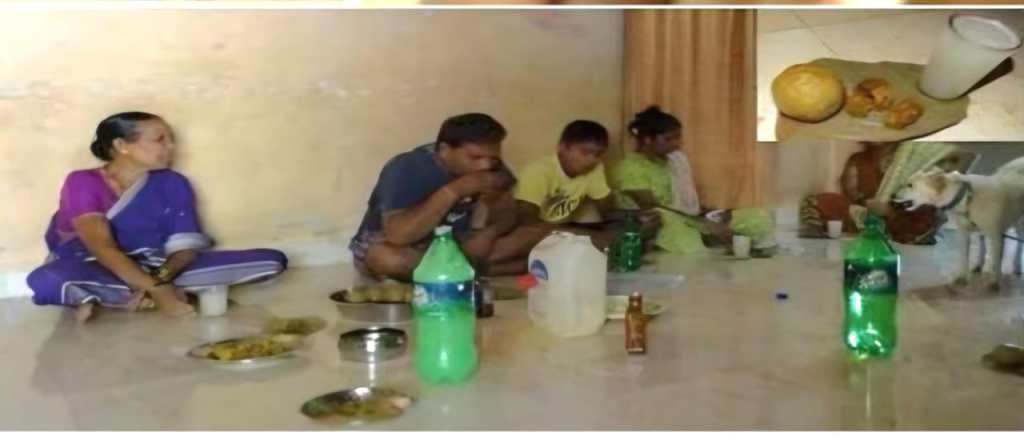
    This living tradition is also central to Dahanu’s growing heritage tourism. It is supported by the PESA Act of 1996—which permits tribal households to store limited quantities of toddy for domestic or ritual use. Sustainable toddy tapping continues to thrive as a vibrant expression of cultural resilience and ecological wisdom.

    Information collected by Dr. Suchandra Dutta from different sources in google and personal observation. Photos clicked at Kainad, Ganjad villeges in Dahanu. Email: greenneev.mumbai@gmail.com

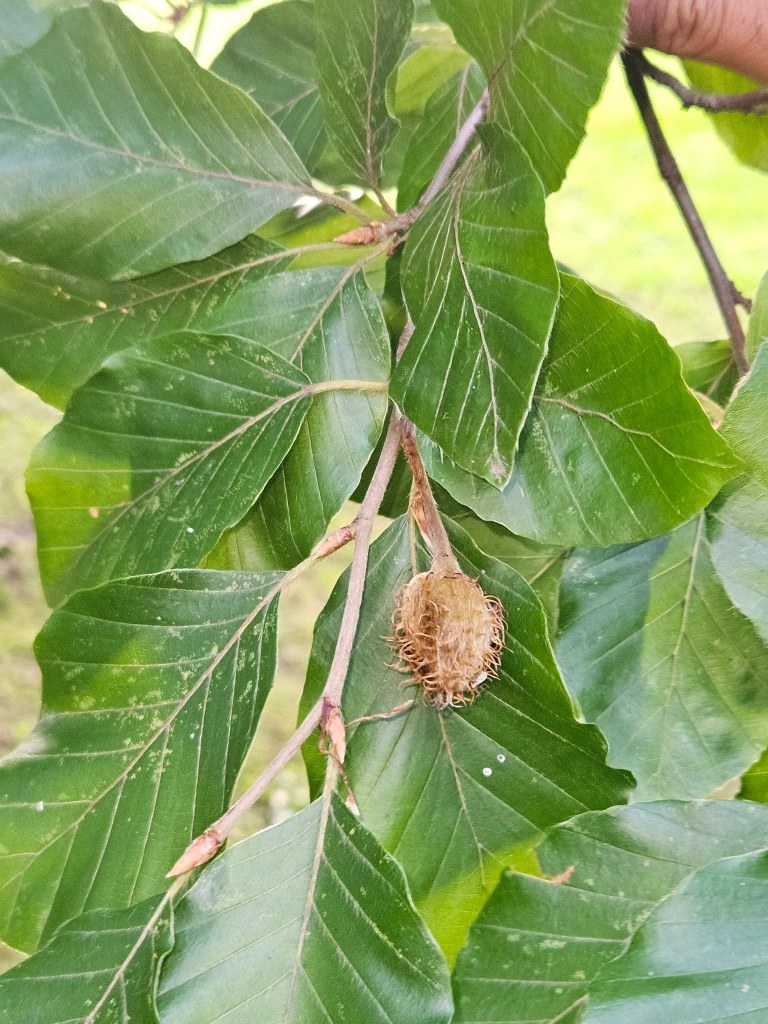
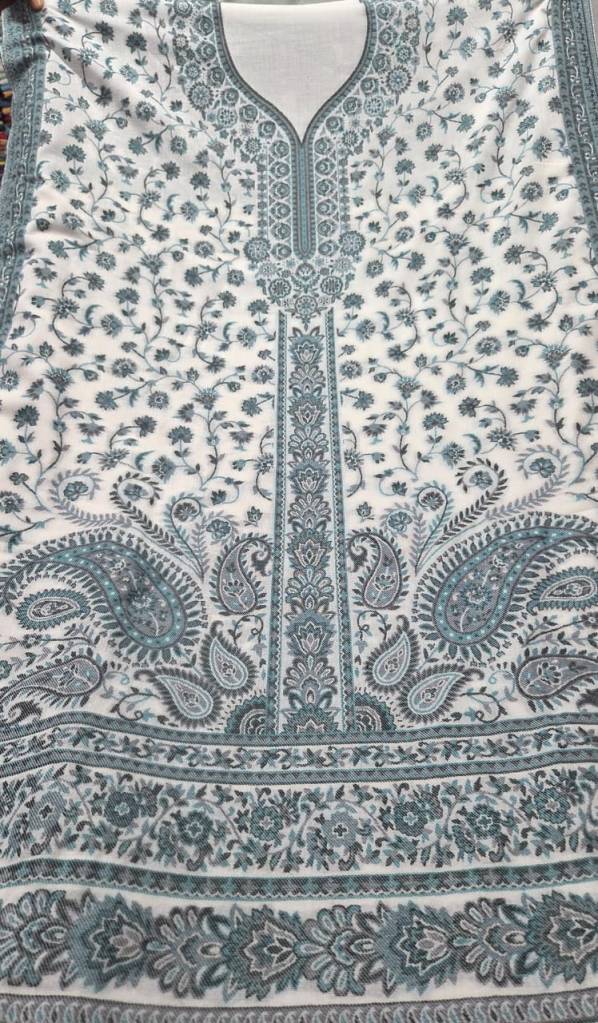
  • Modal silk is a luxurious, eco-friendly fabric derived from the fibers of Fagus sylvatica L. (Fagaceae), commonly known as beechwood, a tree native to Europe. As a regenerated cellulose fiber, it closely imitates the softness, sheen, and elegant drape of natural silk. Known for its exceptional softness, breathability, durability, and excellent color retention, modal silk has become a popular choice for garments and sarees. It is also generally more affordable than pure silk and more sustainable to produce.

    Fagus sylvatica L (Beech Tree ) PC : Pramodchandra P. Harvey , from Austria

    Characteristics of Modal Fiber:
    Modal fiber offers a rich, silky feel and a natural luster comparable to real silk. Highly breathable, it ensures comfort across various climates. The fabric is strong, durable, and resistant to pilling, and it absorbs dyes efficiently, resulting in vibrant and long-lasting colors.

    The production process involves breaking down beechwood pulp and spinning it into fibers, which are then woven into fabric. Since it is made from a renewable resource, modal is regarded as an environmentally responsible textile option.

    The modal available in today’s market primarily includes LENZING Modal, produced by the Austrian company Lenzing, and Formotex Modal, manufactured by Taiwan’s Chemical Fiber Corporation (FCFC). Other well-known varieties include Bilra Modal and Bilra Modal Micro from Thailand’s Thai Rayon, as well as Bilra Modal Micro produced by India’s Grasim. Due to variations in manufacturing processes, modal fibers from different companies exhibit distinct surface characteristics.

    Modal silk is widely used in both casual and formal clothing. It is especially popular for crafting sarees, which are available in various styles, including block-printed and Ajrakh designs. Lenzing Modal’s pulp comes from Austrian beech trees that are about 10 years old.

    The following section provides a brief overview of the key characteristics and identification methods of Lenzing Modal, Formotex Modal, and Lyocell fibers commonly available on the market.

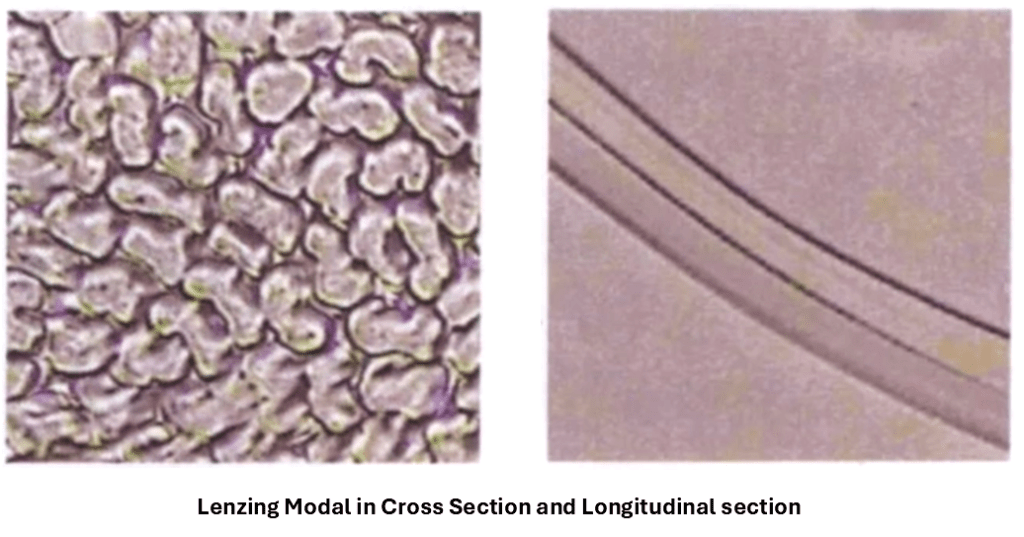
    Under the microscope, Lenzing Modal shows a dumbbell-shaped cross section with no central cavity, while its longitudinal surface appears smooth with one to two grooves. At room temperature, Modal is dissolved after 5 minutes of treatment with 59.5% sulfuric acid and 37% hydrochloric acid reagents.  (Ref. https://bostonscrub.com/)

    Modal silk Fabric

    Information compiled from various sources  by Dr. Suchandra Dutta (greenneev.mumbai@gmail.com)


  • Madhubani Painting, also known as Mithila Painting, is a traditional art form that originated in the Madhubani district of Bihar. Practiced mainly by women across various parts of the state, it gradually earned recognition in contemporary art. Once limited to bhitti chitra (wall paintings), it has now expanded onto cloth, canvas, paper, wood, sarees, and numerous other mediums.

    The colors used in Madhubani painting are traditionally derived from nature. Women collect leaves, flowers, fruits, and barks from courtyards and fields to prepare pigments. Leaves of tilkor (Coccinea grandis), neem (Azadirachta indica), bel (Aegle marmelos), and banana (Musa × paradisiaca) yield varied greens. Bougainvillea blossoms provide delicate pinks, while petals of the palash tree (Butea monosperma) are boiled into a bright orange. Turmeric brings golden yellow, and the deep blues emerge from indigo leaves (Indigofera tinctoria) and fruits of sikkat (Phyllanthus reticulatus). Bark of khair (Acacia catechu) gives earthy browns, while rice grains, pounded into a paste, create white outlines. To enhance durability, these pigments are mixed with natural binders such as tree gum or goat’s milk and stored in earthen pots. When applied, every stroke becomes a conversation with the earth—where leaves, flowers, and rice grains breathe life into the painting.

    Plants in Madhubani painting go beyond ornamentation; they embody symbols of life, divinity, and continuity. The lotus (Nelumbo nucifera) represents purity and creation, while the pipal (Ficus religiosa) stands as a sacred bridge between heaven and earth. Bamboo groves denote fertility and resilience; tulsi (Ocimum tenuiflorum) signifies healing and devotion; the kadamb (Neolamarckia cadamba) evokes love, romance, and joy. Floral borders and winding creepers frame abundance and continuity. Each botanical motif carries layered meaning, transforming the artwork into a living garden where nature and culture thrive together

    Madhubani painting not only preserves tradition but also fosters ecological awareness. By celebrating sacred trees such as pipal, banyan, kadamb, bamboo, and tulsi, along with flowers like lotus and marigold, the art reinforces their cultural and ecological value. Communities are thus reminded to protect and nurture these species. The reliance on natural dyes further strengthens bonds with the environment, promoting sustainable harvesting practices and transmitting traditional ecological knowledge to younger generations. In this way, Madhubani painting emerges as a cultural bridge for plant conservation—safeguarding biodiversity through art, memory, and everyday practice.

    Information compiled by:  Dr. Suchandra Dutta from various sources and through interviews with Madhubani artists Shri Krishna Kumar Jha and Smt. Divyani Jha, Madhubani, Bihar. :        : greenneev.mumbai@gmail.com

  • This is a cloth made out of the bark of the paper mulberry tree (Broussonetia papyrifera). The textile is like cotton and is used in traditional fiber crafts  to make a naturally breathable fabric. The textile above is originally from Kashmir. It is artistically woven using the Kani technique, where deodar wood bobbins are used to create intricate patterns against the cotton base.

  • Welcome to WordPress! This is your first post. Edit or delete it to take the first step in your blogging journey.